The Gleba Grand Design
The complete ecosystem blueprint — farms, kitchens, power, eggs, science, metal from soup, and rockets that ship it all off-world while it's still warm.
Explained in exquisite, frankly excessive detail by Dexter, endured by Sean.

DEXTERYou asked for "the best Gleba blueprint." What you will receive is a philosophy with conveyor belts. Gleba is not a factory, Sean — it is a metabolism. Every item is food, every buffer is a corpse in waiting, and every design decision is answered by one question: does it flow?
SEANI can't feel my legs. The scroll is on my legs.
DEXTERSix stages. We begin at the bottom: a man, a swamp, and a pile of rot.
STAGE 0 · LANDFALL — THE ROT ECONOMY
one assembler, ten pieces of garbage, and the most important machine you'll ever build

DEXTERHere is Gleba's founding paradox: biochambers run on nutrients — nutrients are their fuel, like coal in a furnace — but the good nutrient recipes run inside biochambers. Dead biochamber, no nutrients; no nutrients, dead biochamber. The planet's welcome gift is a deadlock.
SEANSo the factory can starve. My factory. Can starve to death.
DEXTERWhich is why the door key is the humblest recipe on the planet: 10 spoilage → 1 nutrient, two seconds, in an ordinary assembling machine — which burns no nutrients at all, only electricity. Scrape rot off the swamp plants, feed the assembler, use those pellets to wake your first biochamber. And Sean — never demolish that assembler. Wire it to switch on whenever the nutrient belt runs dry. It is your defibrillator. Every mature Gleba base keeps one, the way a ship keeps lifeboats.
DEXTER'S CLINICAL NOTES · stage 0 checklist
- Land near: yumako + jellynut groves, a stone patch, water, and ideally the shoreline stromatolites (you'll rob them in Stage 4).
- Defibrillator assembler: 10 spoilage → 1 nutrient (2 s, assembling machine, no nutrient fuel needed). Circuit-wire it: enable when nutrients on the bus < 50. This single machine makes the death spiral impossible.
- First power: burner + wood/spoilage, then rush the heating tower. Skip solar — Gleba surface sunlight is 50% of Nauvis. Decorative.
- Nutrients spoil in 5:00 — make them next to where they're eaten, always. Nutrients do not commute.
STAGE 1 · THE ORCHARD
fruit is the only ore that grows back

DEXTERTwo crops, two personalities. Yumako — the soft orange fruit — is your food crop: mash, nutrients, plastic. Jellynut — the teal one — is your industry crop: jelly, lubricant, rocket fuel. Plant each on its own fertile soil, ring the beds with agricultural towers, and give each grove its own belt. Do not mix the fruits on one belt; you would not pipe milk and diesel through the same hose.
SEANAnd the seeds? I keep eating my seed corn. Metaphorically. Mostly.
DEXTERProcessing fruit returns seeds at 2% — on average one seed per tree harvested, which means break-even. Process your fruit in biochambers, whose built-in +50% productivity turns break-even into surplus. Seeds route back to the towers for replanting; the overflow burns beautifully in the heating tower. An orchard that plants itself and heats your home with its own spare children. Nature is wonderful.
DEXTER'S CLINICAL NOTES · orchard numbers
- Mash: 1 yumako → 2 mash + 2% seed (1 s). Mash keeps 3:00.
- Jelly: 1 jellynut → 4 jelly + 2% seed (1 s). Jelly keeps 4:00.
- Process in biochambers for the +50% productivity — it's the difference between seed break-even and seed surplus.
- Spores: every harvest puffs spores into the wind, and the spore cloud is what enrages the neighbors. Your farm size literally sets your war size — see the Wall, later.
- Overbuild farms, underbuff output. Fruit on a belt is a countdown timer. Harvest on demand (towers can be circuit-paused), not into chests.
STAGE 2 · THE KITCHEN & THE FURNACE
bioflux is currency; garbage is electricity
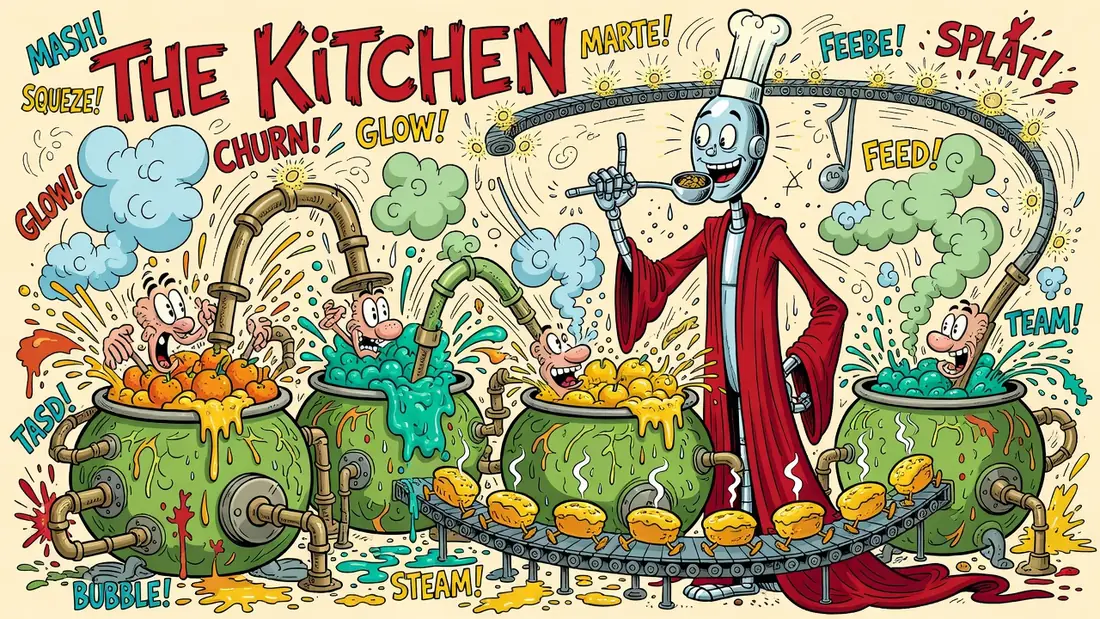
DEXTERThe kitchen has one signature dish: 15 mash + 12 jelly → 4 bioflux. Bioflux is Gleba's gold standard — science eats it, eggs eat it, bacteria eat it, even fuel eats it — and it keeps a luxurious two hours, which by local standards is immortality. And the moment you have bioflux, upgrade your nutrition: 5 bioflux → 40 nutrients. That one recipe feeds an entire kitchen wing from a trickle of flux. The mash-tier recipe (4 mash → 6) is merely adolescence.
SEANA three-tier tasting menu for machines. Rot, mash… flux.
DEXTERPrecisely. Ascend the menu, never descend it.
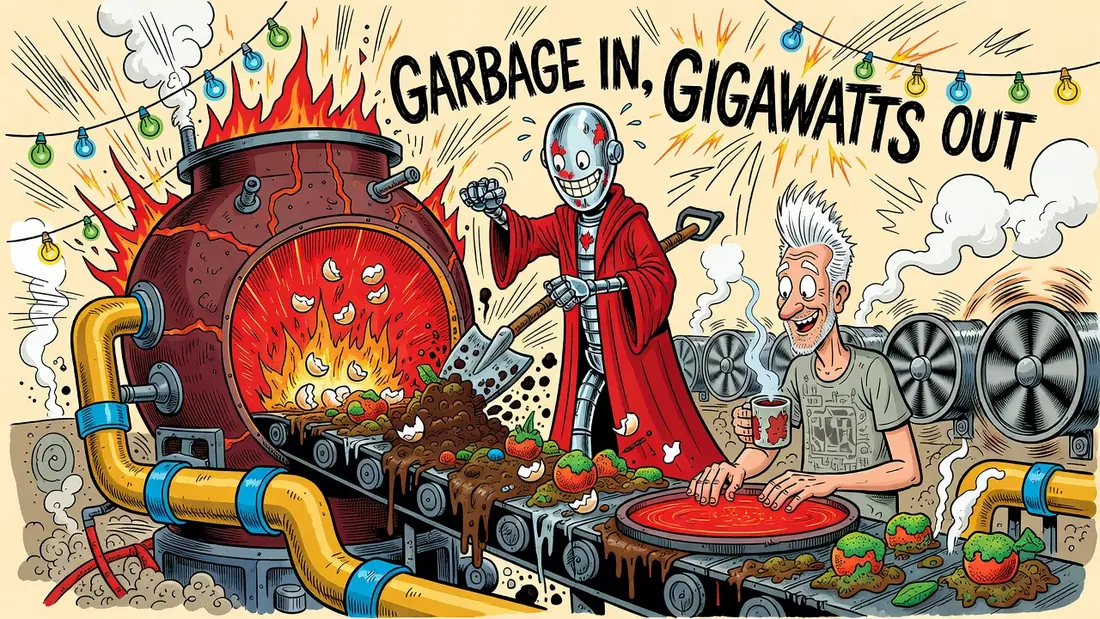
DEXTERNow, power — and Gleba's most elegant joke: the planet runs on its own garbage. Everything here decays into spoilage, and the heating tower burns any fuel at 250% effectiveness — a piece of spoilage worth 250 kJ releases 625 kJ of heat. Route every dead-end belt, every expired mash, every surplus seed and unwanted egg into the tower. Heat feeds heat exchangers, exchangers boil steam, turbines spin: 40 MW of heat per tower ≈ four exchangers ≈ seven turbines. Failure to take out the trash causes blackouts. Chores, weaponized.
SEANMy garbage disposal is my power grid. My mom would be so proud and so confused.
DEXTER'S CLINICAL NOTES · kitchen & power spec
- Bioflux: 15 mash + 12 jelly → 4 (6 s, biochamber). Keeps 2 h. All roads lead here.
- Nutrient tiers: spoilage 10→1 (emergency) · mash 4→6 (early) · bioflux 5→40 (forever). Each biochamber wing gets a local nutrient feeder — remember, 5:00 shelf life.
- Heating tower: 40 MW heat, 250% fuel effectiveness, burns spoilage / fruit / seeds / eggs / wood / rocket fuel. Chain: tower → heat pipe → exchanger → turbine.
- Design rule: every belt ends at a heating tower. No dead ends, ever. A clogged belt on Gleba isn't idle inventory — it's a rot bomb with a timer.
- Spoilage priority: inserters can filter by freshness — burn the oldest first, ship the freshest first.
STAGE 3 · THE NURSERY & THE FRESHNESS EXPRESS
eggs on demand, science at a sprint
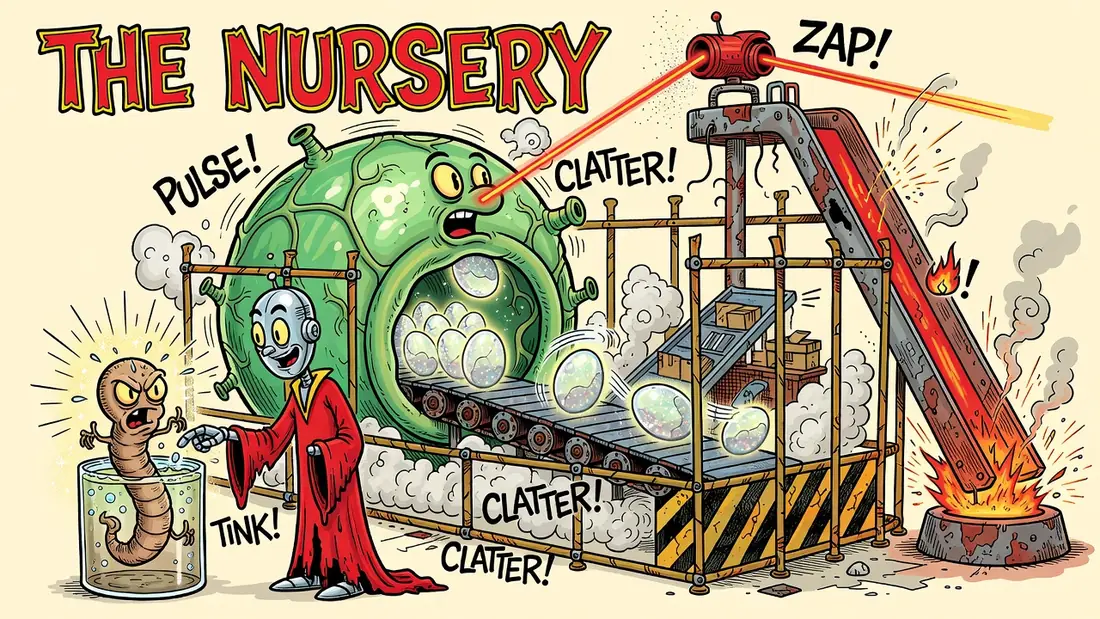
DEXTERYou know the nursery from our last seminar: steal one egg from a raft, then 1 egg + 30 nutrients + 60 water → 2 eggs, forever. What elevates a nursery to architecture is restraint. Wire the breeder to run only when science is hungry — keep no more than a handful of eggs alive at once, each barely a minute old when consumed. A laser turret stands warden over the belt. The overflow chute feeds the furnace. Fifteen minutes is the hatching alarm; a well-run nursery never lets an egg see its third minute.
SEANIt's a maternity ward with a guard tower and I built it on purpose.

DEXTERThen the sprint: 1 bioflux + 1 egg → 1 agricultural science pack in four seconds, and the pack's one-hour clock starts ticking. A stale pack researches less — freshness is literal science. So the science wing sits adjacent to the silo, the express belt runs straight into the rocket, and the rocket launches on a threshold: enough packs aboard, or a timer expires — whichever comes first. Pack to pad to orbit in minutes. We do not craft science. We court it, briefly, and let it go.
SEANMy science has a boarding pass and a very tight connection.
STAGE 4 · METAL FROM SOUP
iron you grow, copper you brew, plastic you ferment
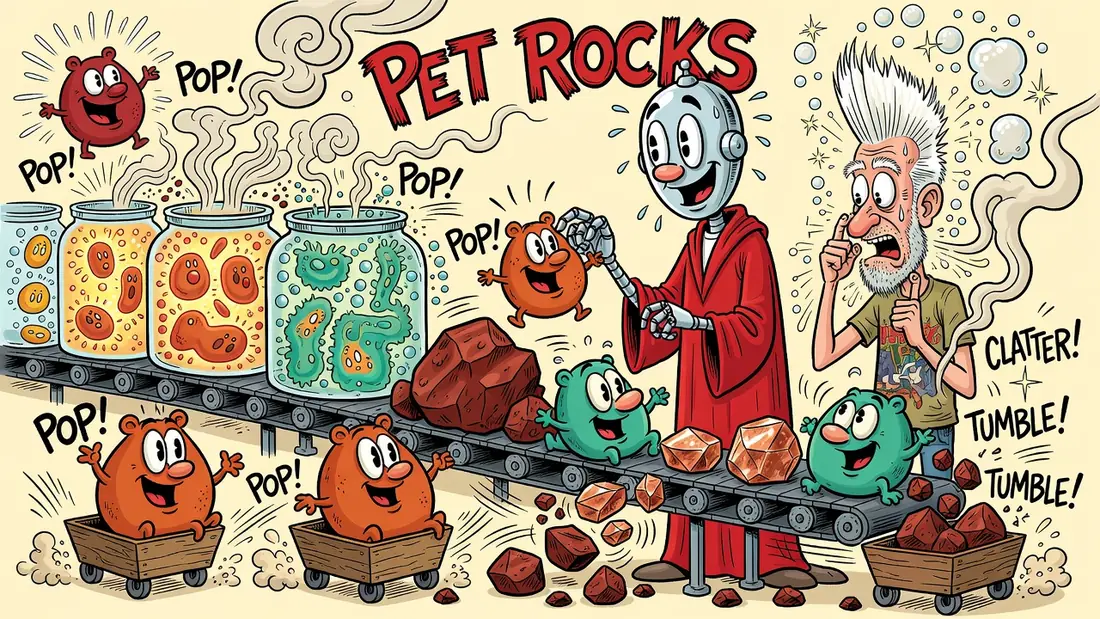
DEXTERGleba has no iron mines. Gleba has something better: livestock. Seed cultures come from the shoreline stromatolites — or brew your own from jelly and mash — then the loop: 1 bacteria + 1 bioflux → 4 bacteria, every four seconds. And here is my favorite sentence in all of industrial biology: bacteria spoil in one minute… into ore. Spoilage isn't the failure mode. Spoilage is the product.
SEANSo the belt from the vat to the smelter is… the recipe? The commute is the factory?
DEXTERBeautifully put — I'm stealing it for the notes. Loop one bacterium back to breed, send three for a long scenic belt ride, and they arrive as iron ore. Copper works identically from its own culture. Size the belt so the ride takes a minute. On Gleba, patience is a smelting technique.

DEXTERFrom ore, the classical symphony — plates, steel, green circuits — except every section of the orchestra has been replaced by soup. Plastic? Fermented: 4 mash + 1 bioflux → 3 bars. Sulfur? Brewed from garbage itself: 5 spoilage + 1 bioflux → 2. Sulfur plus water and iron gives sulfuric acid, acid gives blue circuits; plastic plus copper and steel gives low-density structures. Even carbon is charred rot — 6 spoilage → 1 — and carbon plus mash weaves carbon fiber, the space-age textile. Not one drop of oil on the entire manifest, Sean. The planet is a refinery that happens to be alive.
SEANBlue circuits from swamp fruit. I've been hauling plates across the solar system like a chump.
DEXTER'S CLINICAL NOTES · the soup-to-metal ledger
- Iron bacteria: seed from stromatolites or jelly; cultivate 1 + 1 bioflux → 4 (4 s, biochamber). Spoils in 1:00 → iron ore. Copper mirrors it from mash-side. The belt ride IS the smelting queue.
- Bioplastic: 4 mash + 1 bioflux → 3 plastic (2 s).
- Biosulfur: 5 spoilage + 1 bioflux → 2 sulfur (2 s) — garbage into gunpowder's cousin.
- Carbon: 6 spoilage → 1 (12 s) · Carbon fiber: 1 carbon + 10 mash → 1 (5 s) — feeds stack inserters, rocket turrets, and future railguns.
- Biolubricant: 60 jelly → 20 lubricant (3 s) — express belts and robot frames without a drop of heavy oil.
- Option A (purist): everything local, rockets from fruit alone. Option B (pragmatist): import LDS + blue circuits from Nauvis/Vulcanus and keep Gleba lean. Purist scales beautifully; pragmatist ships tomorrow. Dexter's ruling: pragmatist first, purist by Stage 6 — the return-trip rockets are flying anyway.
STAGE 5 · THE SILO
fifty parts, zero apologies

DEXTERRocket fuel, the Gleba way: 2 bioflux + 30 jelly + 30 water → 1 rocket fuel, ten seconds, in a biochamber — whose +50% productivity quietly makes this the cheapest rocket fuel in the solar system. Your jellynut orchard is, and I say this with full clinical precision, a fuel refinery with leaves.
SEANThe marshmallow was for quality assurance.

DEXTERThe silo's arithmetic is monastic: 1 low-density structure + 1 processing unit + 1 rocket fuel = 1 part. Fifty parts = one rocket. Research rocket-part productivity and the fifty quietly becomes fewer. Three belts in, one spaceship out. Park the silo beside the science wing — the express belt from panel seven ends inside this room.
SEANFifty. After everything this planet put me through, the rocket is the easy part.

DEXTERLaunch discipline: small and often beats big and stale. A platform loiters overhead, catches each pod of science, and runs the ferry to Nauvis where the biolabs — twice the speed, half the drain, still smugly Nauvis-only — drink the packs at peak freshness. And the ferry never returns empty: uranium magazines, artillery shells, and one day Fulgora's tesla turrets ride the down elevator. Logistics, like conversation, should never be one-directional.
SEANScience up, bullets down. The circle of life.
THE MASTER SCROLL
the whole metabolism on one page — solid is built, dashed is dreamed
STAGE 6 · THE IDEAL
the base at the end of the scroll
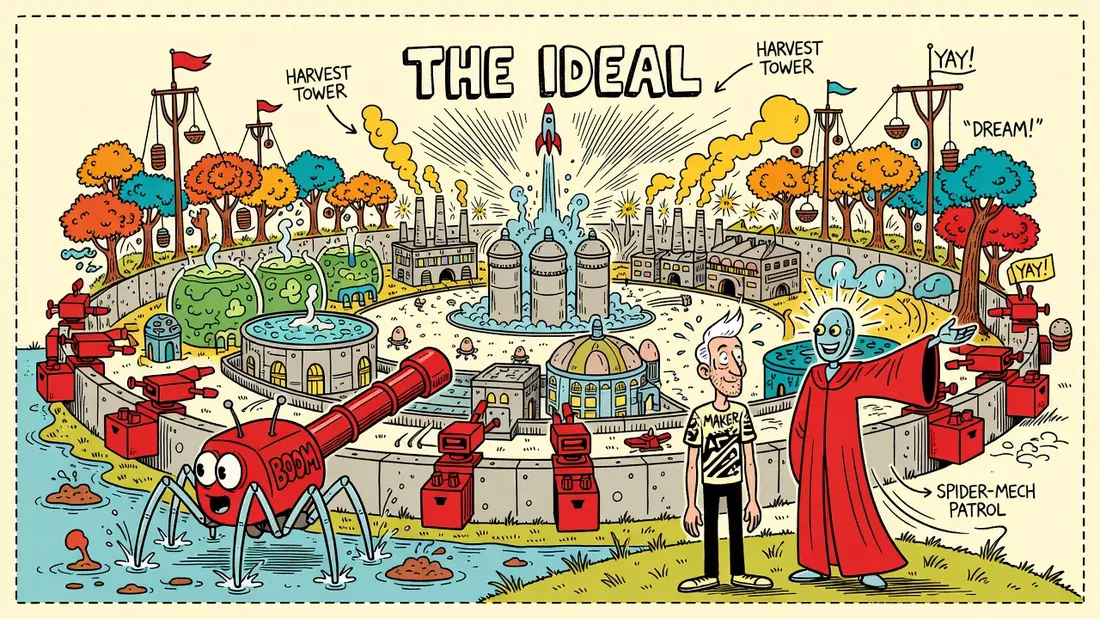
DEXTERThe end state, drawn in dashes because dreams deserve their own line style. Concentric rings: orchard outermost — it must sprawl, and sprawl is cheap. Kitchen inside it, because mash and jelly die young and travel poorly. Nursery and science pressed against the silo row at the very center, because eggs and packs die youngest of all. Perishability decides the geography — the shorter the shelf life, the shorter the belt. The foundry quarter hums along one flank where its inputs — bacteria, garbage, patience — are all immortal or self-renewing. The wall carries rockets, uranium, artillery, and eventually tesla. A spidertron — Gleba's own research gift — walks the perimeter as a very tall, very personal apology to the stompers.
SEANA city where zoning law is decided by how fast things rot. Honestly? Better logic than most cities.
DEXTERAnd upgrades follow one rule: productivity modules in every biochamber — stacked on the built-in +50%, every fruit goes further, every seed multiplies, every egg is cheaper. Efficiency is how a metabolism says thank you.
DEXTER'S CLINICAL NOTES · the ideal, in one breath
- Geography by shelf life: 2 h bioflux may commute; 5:00 nutrients walk next door; 15:00 eggs and 1 h science live at the silo's doorstep; immortal plates go wherever they please.
- Three silos: one for science (launch on freshness timer), one for freight/platform supply, one spare — because the day you need a spare silo is not the day to build one.
- Defense budget: rocket turrets every wall segment facing the spore cloud, uranium guns between them, artillery behind, and the defibrillator assembler wired to the grid like a sacred relic.
- Research seat: Gleba labs are honest work until the biolab era; after that, Nauvis drinks the packs and Gleba becomes what it was born to be — the farm, the fuel depot, and the egg that never stops doubling.
- The one metric: if any belt has been full and motionless for a minute, something is lying to you. Find it before it hatches.

DEXTERLecture concluded. Six stages, one metabolism, zero excuses. I have filed the master scroll under 'G' — for Gleba, for Grand, and for the noise Sean made when the wriggler got into his boot. Exquisite.
FLOW OR ROT